Hi-Vis Safety Wear Standards: ANSI Classes Explained
The ANSI class number on a hi-vis label isn't a quality rating — it's a specific visibility requirement tied to how close workers get to moving vehicles and traffic.
Technical Context
Established in 2015, our Sialkot unit operates on a Technical-First mandate. For brands targeting 2026 growth, understanding the following points is non-negotiable for export-grade success.
The class number is about risk exposure, not garment quality
A common misunderstanding is treating ANSI Class 3 as simply "better" than Class 2, the way a higher price tier is better. In reality, the class system is matched to how much visibility risk a specific job actually involves — a Class 3 garment isn't superior for someone who doesn't need that level of visibility, and using it doesn't compensate for choosing the wrong garment type for the job.
What ANSI class actually measures
The classification is based on the amount of high-visibility background material (the bright fluorescent fabric) and retroreflective material (the reflective strips) on the garment, which together determine how visible the wearer is at distance and in low light or vehicle headlights.
Class 1 — lowest visibility requirement
Intended for environments with slow-moving vehicles and clear separation between workers and traffic — think parking attendants or warehouse workers away from roadways. This is the minimum hi-vis tier and is rarely the right choice for any road-adjacent work.
Class 2 — the most common general-purpose tier
Covers most road construction crews, warehouse workers near vehicle traffic, and utility workers — situations with moderate traffic speeds or where workers need to be visible against a complex background. If you're placing a bulk order without a specific regulatory requirement dictating Class 3, Class 2 is the most broadly applicable starting point for general industrial/construction use.
Class 3 — highest visibility requirement
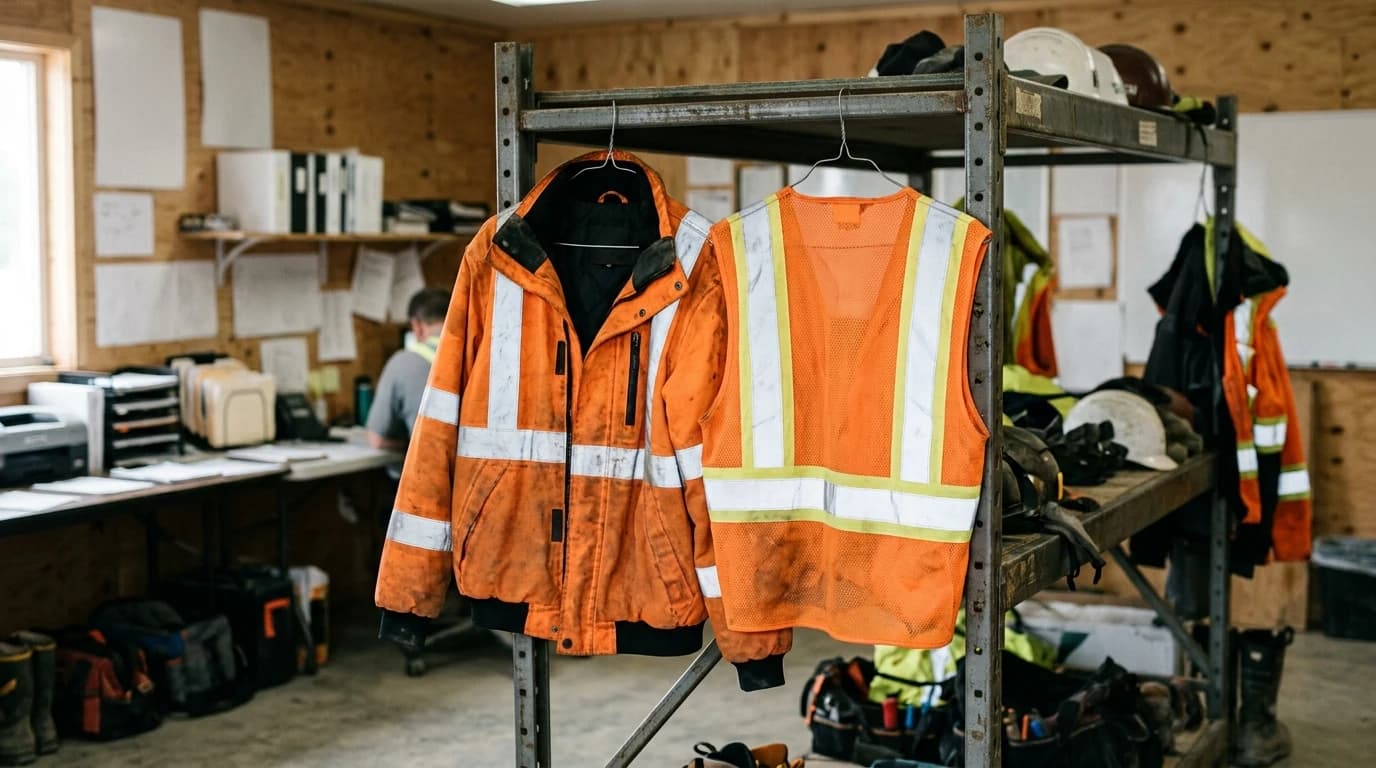
Required for workers close to high-speed traffic (highway crews, roadside emergency response) or in low-visibility conditions where maximum distance visibility is critical. Class 3 garments have the most background and reflective material, often including sleeves (not just a vest), because visibility needs to hold up from a full-body silhouette at a distance, not just the torso.
Why picking the wrong class isn't just "extra safe, no harm done"
Assuming higher is always safer skips two real trade-offs: Class 3 garments are heavier and less breathable due to the increased material coverage, which matters for worker comfort and compliance (workers are less likely to keep wearing a garment that's uncomfortable in hot conditions). And for a bulk order, over-specifying class across an entire workforce that doesn't need it adds real cost without a corresponding safety benefit for roles that never approach high-speed traffic.
A practical way to decide for your order
Match the class to the actual job, not to "safety margin" thinking:
- Workers primarily indoors or in low-traffic areas → Class 1 is often sufficient, or hi-vis may not be required at all
- General construction, warehouse-with-vehicle-traffic, most utility work → Class 2 covers the majority of use cases
- Roadside, highway-adjacent, or low-light/high-speed-traffic work → Class 3 is the appropriate (and often regulatory-required) tier
If your workforce covers multiple risk levels — say, some crew members near highway traffic and others in a yard — it's common and reasonable to order different classes for different roles rather than defaulting everyone to the highest tier.
Before placing a bulk safety wear order
Check your local/industry regulatory requirement first — in many jurisdictions the class isn't just a recommendation but a legal minimum for specific job types. Once you know the required class, browse our Safety Wear category or submit your workforce requirements through the Inquiry form and we'll confirm the right class and garment type for your order.
All technical data points mentioned above are based on AAFA Sports' internal manufacturing audits. Contact our production lead for specific tech-pack integration.